
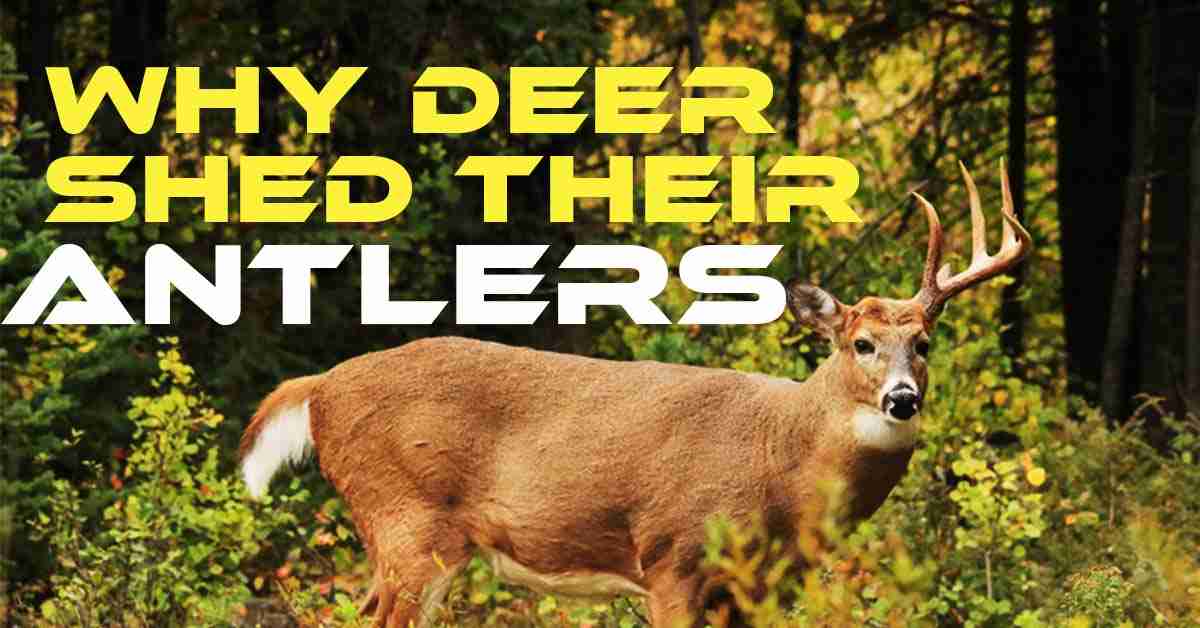

You may have seen a buck while driving to work with one missing antler, or found an antler all by its lonesome in the woods and wondered, “why?”. “Shouldn’t these things stay on the buck’s head?”, “Is this normal?”. Read on to learn why and when deer lose their antlers…
Deer shed their antlers once a year. Deer start shedding in January and can shed as late as April. This is because of a drop in testosterone levels after the rut has ended. . The time at which the antlers fall off is greatly affected by the health of the deer. A strong healthy buck will keep his antlers much longer than a starving, beat-up old buck. Antlers grow from pedicles. These are the stubs that stick out of a deer’s skull. Bucks will start growing a new set of antlers and will be fully grown by the next rut before shedding them again.
Read on to learn more in-depth information on deer sheds…
Why Deer Shed, in-depth
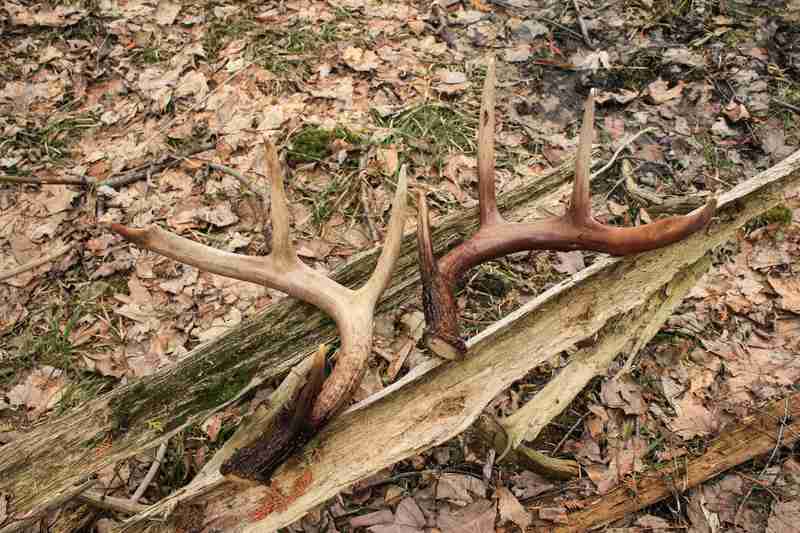
Bucks need their antlers for self-protection and dominance over their domain, as well as the does that live in it. They can withstand a beating during a face-off with another buck and are also used to scrape trees to mark their territory. So if a buck can be so rough on its antlers why do they fall off so suddenly for no apparent reason? Let me explain…
During the summer months, the antlers of a buck will grow to full strength due to hormones that are regulated by how much sunlight the buck gets a day. The less light the deer gets, as well as the higher testosterone levels the buck has, the harder the antlers will be. Bucks reach their peak testosterone levels around October through early November for the breeding season.
After breeding season ends, around late December or early January, a buck’s antlers will begin losing their hold on the pedicles of the deer’s skull. The pedicles are the stubs at the base of the antlers that protrude from the deer’s skull.
The antlers have an extremely tight bond to the pedicles until the buck’s testosterone levels drop. This is because of the bone cell, called osteoclast. Osteoclast absorbs the deer’s bony connective tissue and calcium back into the pedicles resulting in the antler’s hold becoming weak and falling off.
Bucks sometimes rub their antlers on trees to free their antlers after the connection becomes weak.
Do deer bleed when they shed their antlers?
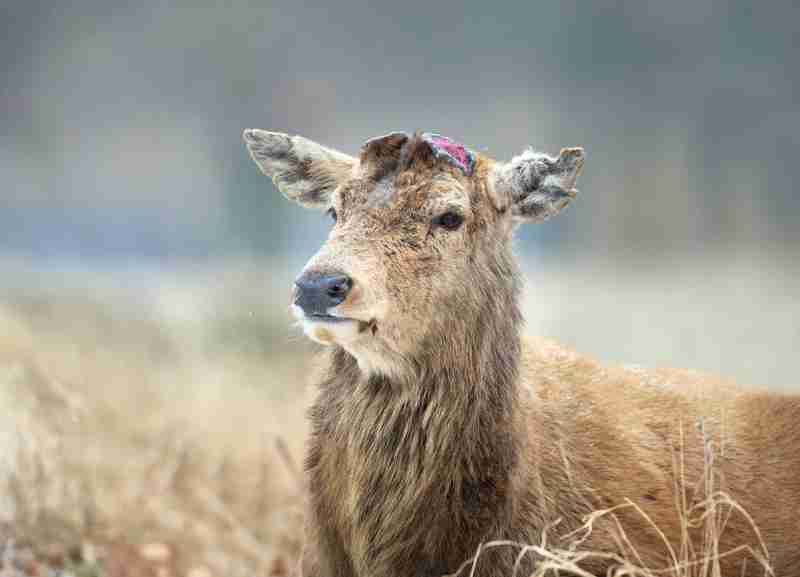
When a deer loses its antlers it will leave a small crater in the pedicle of around 1/2 inch deep. The exposed bone will bleed a little but will scab over and heal with greyish skin covering the crater.
Does deer antler shedding hurt?
One may think that a deer losing its antlers would be painful, but this is likely not the case. In a study, researchers discovered that deer produce high levels of B-endorphin when stressed. These high levels increase the pain threshold of deer and support rapid healing of the enflamed pedicles. So it probably does not hurt but if you really want to know, ask your local deer 😉
What happens to deer antlers after they have been Shed?
How to find deer sheds
It can be pretty difficult to spot a shed in the woods. With every buck dropping its antlers every year, you would think they would be everywhere and easy to find. That is simply not the case. Fallen leaves and branches quickly cover the sheds making them difficult to distinguish from sticks. Here are some pointers to help you snag a few sheds. People are willing to pay up for a nice pair of sheds making the endeavor worth your while.
- Scout where the deer are most active to get a good idea as to where to find sheds. Look for bedding and feeding areas. It can take a whole season to figure out where the bucks will most likely shed but it is all part of the fun.
- Don’t expect to have immediate success. Shed hunting takes a certain skill set that can only be gained with years of practice. Enjoy the process, it will be worth it in the end.
- Google Earth is an invaluable tool in shed hunting. No, you cannot find sheds with Google Earth, but when you do find a shed, zoom in on that spot with Google Earth. Then zoom out and look for a spot that looks similar within a 25-mile range or so, this method can really help rack up some antlers.
- Look around creeks where deer trails go through it. Deer will need to jump across making the antlers fall loose
- Move slow and be observant, it can be hard to see a shed that is right next to you.
- Deer sheds pop up more easily after it has rained on a cloudy day.
Conclusion
Although it may seem strange, shedding antlers every year is all part of being a male deer. Deer shedding is completely natural. I hope you have learned something new and have a newfound curiosity into the world of shed hunting. Thank you for reading. Share your deer shed expertise, questions, and your tips for shed hunting in the comments below.