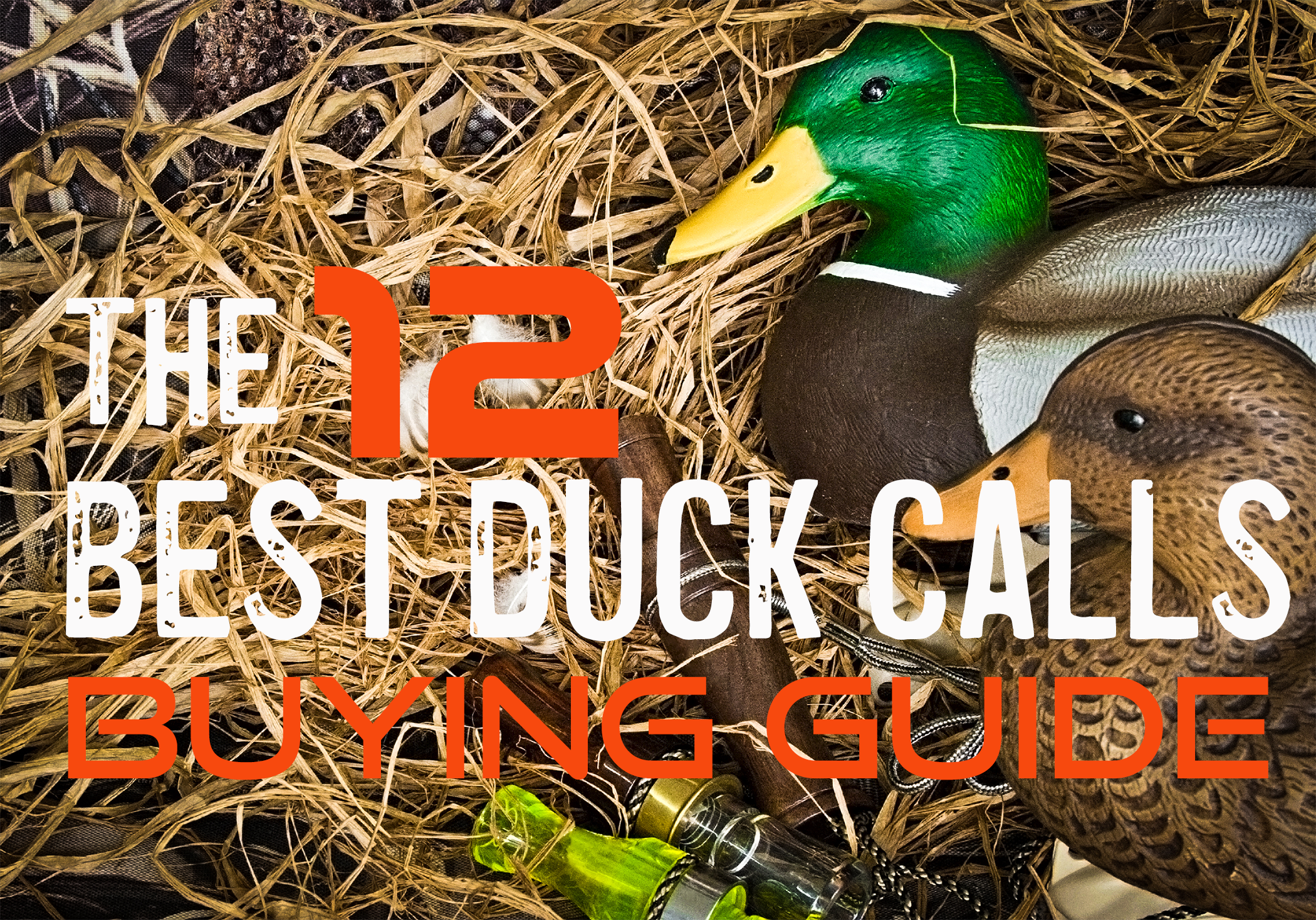

A duck call is just about the most important tool in a hunter’s arsenal to successfully put fresh meat on the table. You could have a huge spread of decoys, plus the fancy motion decoys that add movement to the water. But if you don’t make the realistic sounds to back it all up, ducks won’t be convinced and look elsewhere for a landing spot.
Looking for the best duck call for your needs can be a difficult task. With so many options on the market, making a final decision and pulling the trigger can be overwhelming. We’ve done the leg work for you and compiled a list of the best duck calls, so you are confident you are making a wise purchase that gives you success season after season.
Quick Look of Our Top Picks
Best Overall–Duck Commander Jase Robertson Pro Series Duck Call
Runner Up–Duck Commander Triple Threat
Best Budget–Flambeau Outdoors Lohman Gold Series Duck Call
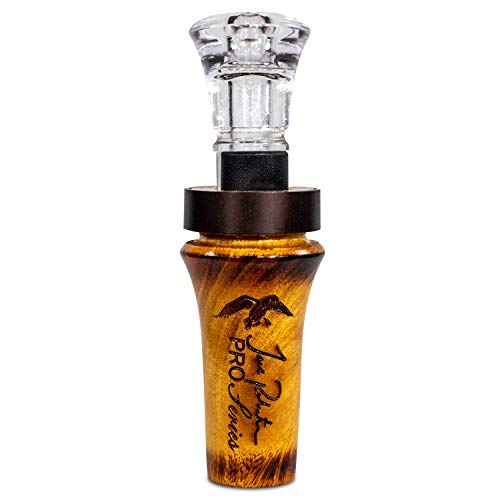
[Best Overall]Duck Commander Jase Robertson Pro Series Duck Call


Designed by Jase Robertson himself, this call is a true powerhouse bringing many high-quality features to the table that would normally run you $150 from other brands.
This call is an Amazon bestseller for a reason. A double reed system makes it easy to use plus creates low and high tones to serve your needs in almost any scenario. Comes in acrylic and wood models with a wide variety of color options so you are almost guranteed not to confuse your call with a buddie’s. The quality is unmatched by any other call at this price point. Does feed, hail and quack calls like a champ. This an excellent choice for beginners and pros alike giving this call the title, best overall.
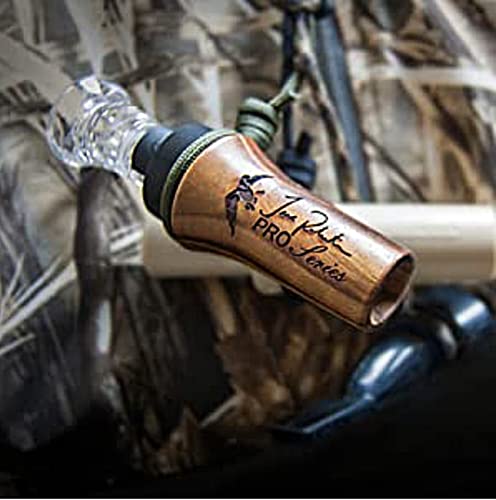

- FINISHING CALL: Very soft tone perfect for that last pass
- Designed to have the same volume and range as a Mallard Hen
- The SMOOTH AND LOW-END properties allow you to blow quietly when ducks are in close range
- EASY TO BLOW - Phil Robertsons Patented Double-reed, friction fit system
- HIGH GRADE Wood with a Polycarbonate Insert
Prices pulled from the Amazon Product Advertising API on:
Product prices and availability are accurate as of the date/time indicated and are subject to change. Any price and availability information displayed on [relevant Amazon Site(s), as applicable] at the time of purchase will apply to the purchase of this product.
Pros:
- Easy to Use
- Double Reed
- Versatile tone Range
Cons:
- Some say it freezes in cold weather.
Flambeau Outdoors Lohman Gold Series Duck Call[Best Budget]


Need a great duck call at an extremely affordable price? Look no further than the Lohman Gold Series Duck Call. This device produces the rich tones of a mallard hen. Created to be simple and streamlined. Uses a single reed for great tone control but may make it harder for a beginner to learn on.
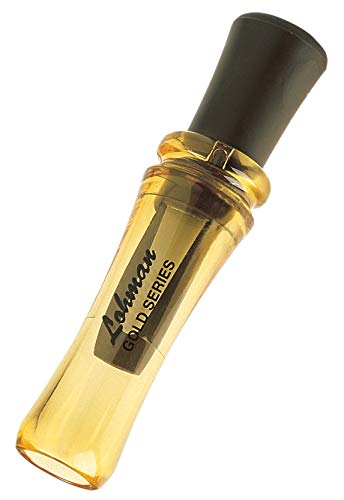
- REALISTIC GOOSE CALL: Produces all of the natural sounds of the Canada Goose. Like the anatomy of a goose neck, the elongated, narrow barrel enriches the sounds of clucks and honks as air passes through the barrel.
- EASY-TO-CONTROL TONE: The simple design of the Lohman Gold Series Goose Call allows you to easily adjust the tone of your calls so you can throw the most convincing honks, moans and clucks at incoming Canadas.
- EASY-TO-USE: The Flambeau Outdoors Lohman Gold Series Goose Call is the ultimate easy-to-use goose call. Minimal air pressure needed to operate for easy goose calling wherever the hunt takes you.
- LOHMAN CALLS: The Lohman name has been synonymous with Real Sound since 1937. Featuring authentic and rich tones, rugged construction and designs for hunters of all skill levels, Lohman calls are among the most recognized in the industry.
- SPECIFICATIONS: Long reed goose call. Hand-tuned. Made in the U.S.A.
Prices pulled from the Amazon Product Advertising API on:
Product prices and availability are accurate as of the date/time indicated and are subject to change. Any price and availability information displayed on [relevant Amazon Site(s), as applicable] at the time of purchase will apply to the purchase of this product.
Pros:
- Gets the Job Done
- Very Affordable
- Great Raspy Sound
Cons:
- An avid duck hunter would say it doesn’t sound the best
Duck Commander Triple Threat[Runner Up]


The Duck Commander Triple Threat has been a staple in the duck commander line for some time. This is a great call all around, well suited for almost any scenario you are in. What makes this duck call stand out is its unique design and ease of use for a hunter at any experience level. Instead of one ore two reeds, this call features three making it extremely forgiving if you make a mistake. It is also Phil Robertson approved so you can’t go wrong.
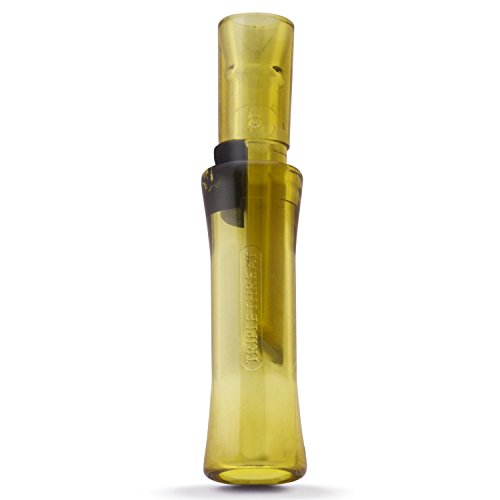
- EASY TO BLOW: triple reed thats actually easy to use when hunting and great for beginners
- PERFECT ALL AROUND CALL: Designed to replicate the Mallard hen in her quack, feed call, and hail call
- UNIQUE TONES: Duck commander duck calls offer low gravel tones for mature hens to high scratchy pitch for young hens
- MATERIAL: Polycarbonate construction made to be tough and durable
- APPROVED: Proven Field Technology that is PHIL ROBERTSON APPROVED!
Prices pulled from the Amazon Product Advertising API on:
Product prices and availability are accurate as of the date/time indicated and are subject to change. Any price and availability information displayed on [relevant Amazon Site(s), as applicable] at the time of purchase will apply to the purchase of this product.
Pros:
- Easy to use
- Great at feed, quack, and hail calls
- unique design
- Three reeds
Cons:
- No groves for a lanyard
- A small portion of reviews say the reeds stick when wet. A common problem in duck calls
Faulk’s Game Calls Deluxe Duck Call WA-33


The Faulk’s WA-33 has old fashioned class at an incredible price point. The walnut construction creates a smooth, rich, and natural tone any duck hunter would drool over. This call features a single reed but is surprisingly easy to use for any experience level. It also holds up to freezing weather very well. If you pull the trigger know you are making a quality decision at a low price.

- Tuned for smooth natural mallard tone
- Sport type: Hunting
- Faulks deluxe duck call
- Made of walnut
- Easy to blow
- Faulks deluxe duck call
- Made of walnut
- Easy to blow
Prices pulled from the Amazon Product Advertising API on:
Product prices and availability are accurate as of the date/time indicated and are subject to change. Any price and availability information displayed on [relevant Amazon Site(s), as applicable] at the time of purchase will apply to the purchase of this product.
Pros:
- Quality walnut wood construction
- Easy to use
- Doesn’t freeze in cold weather
Cons:
- all wood calls require higher maintenance than say an acrylic or plastic call
Duck Commander Duck Picker Call


The Duck Commander Duck Picker is a great and easy call to use thanks to Phil Robertson’s patented double reed friction-fit system. It produces a realistic flat sounding hen mallard sound. This is a very forgiving and beginner-friendly call that anyone can pick up and learn. Unlike most double reeds this call is very loud which will help bring in those long-distance ducks. This dependable product will serve you well for many seasons to come.
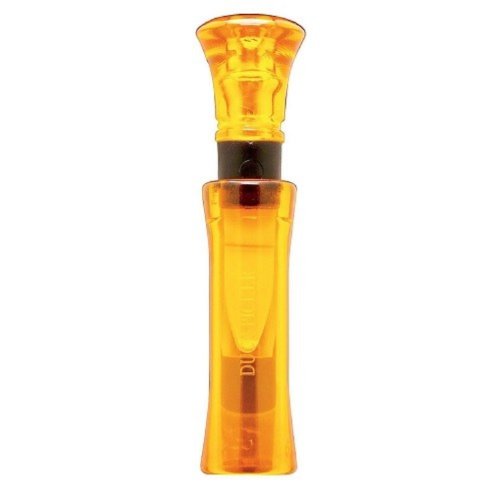
- AIR-BUBBLE TECHNOLOGY resulting in a FLAT SOUNDING hen mallard call
- MADE TO FINISH: Great for in the woods or close-in calling
- ONE OF THE DUCKMENS FAVORITE CALLS - Built for the hardcore hunter who likes a variety of calls
- EASY TO BLOW - Phil Robertsons Patented Double-reed, friction fit system
- The Gunning Series provides CUSTOM-TUNED CALLS at an AFFORDABLE PR
Prices pulled from the Amazon Product Advertising API on:
Product prices and availability are accurate as of the date/time indicated and are subject to change. Any price and availability information displayed on [relevant Amazon Site(s), as applicable] at the time of purchase will apply to the purchase of this product.
Pros:
- Easy to blow
- Works for beginners as well as experienced hunters
- Forgiving
- Very loud (this can be a bad thing if you need a mid range call)
Cons:
- If you need a mid range call this one may be to loud for you
Zink Calls ZNK6056 Drake Mallard Whistle Poly


A whistle call is a must-have in any duck hunter’s collection. Whistlers are all made with a similar tried and true design and there is not much to get wrong when making one. But Zink Calls took a somewhat boring concept and recreated it into a unique design that will look great on your lanyard. There is nothing special about this call compared to other whistlers except for the fact it looks like a mallard head. Duck commander makes a simpler version you can view here on Amazon.

- Great Whistle
- Looks Cool
Prices pulled from the Amazon Product Advertising API on:
Product prices and availability are accurate as of the date/time indicated and are subject to change. Any price and availability information displayed on [relevant Amazon Site(s), as applicable] at the time of purchase will apply to the purchase of this product.
Pros:
- Attracts mallards, pintail, and widgeon
- molded like an acrylic call
- Unique design never seen before in a whistler
Cons:
- There isn’t much to get wrong with a whistle call and Zink nailed it while also giving it a fresh, cool look
Flextone Wood Duck Call


Flextone has created a great, affordable call in a unique soft-body design. What makes this call stand out is the squeezable exhaust port allowing for a wide range of vocalizations. This is an excellent call for a penny pincher and is especially effective on wood ducks according to multiple reviews.
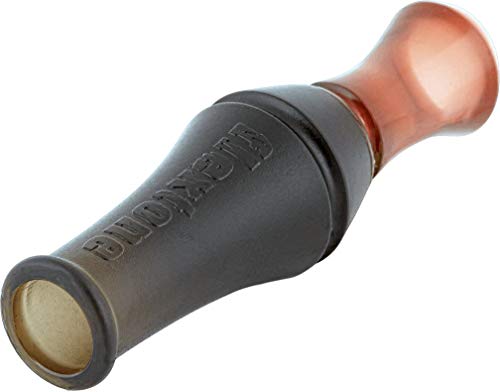
- Our breakthrough design really come through.
- Squeeze the end to produce a full range of vocalizations.
- Mix up the sequences to achieve the flying squeal, the water whine or any sound in between.
- Perfect for that critical moment.
- Make them go crazy.
- Included Components: Hunting Game Calls D
Prices pulled from the Amazon Product Advertising API on:
Product prices and availability are accurate as of the date/time indicated and are subject to change. Any price and availability information displayed on [relevant Amazon Site(s), as applicable] at the time of purchase will apply to the purchase of this product.
Pros:
- Easy to use
- Unique squeezable design to make a full range of vocalization
- Great for calling in wood ducks.
Cons:
- May not hold up well to years of use due to the soft body.
DUCK COMMANDER Camo Max Duck Call

Finally, a duck call that isn’t 


- REALTREE CAMO PATTERN: Realtree Max 4 camo pattern keeps this call hidden in the blind
- DURABLE AND LONG LASTING: Made of high impact & tough plastic
- THE ULTIMATE FINISHER: Best used as a close-in finishing call with its mid- to low-range tone
- CUSTOM-TUNED CALLS: The Gunning Series provides custom calls at an affordable price
- BUILT FOR THE HARDCORE HUNTER: who likes a variety of calls with specific applicati
Prices pulled from the Amazon Product Advertising API on:
Product prices and availability are accurate as of the date/time indicated and are subject to change. Any price and availability information displayed on [relevant Amazon Site(s), as applicable] at the time of purchase will apply to the purchase of this product.
Pros:
- Great low range tone for finishing ducks
- Beginner friendly
- Works great blown soft or hard
Cons:
- Some reviews say reeds stick when wet
Cut-Down 2.0 Classic Double Reed Duck Call


The Cut-Down 2.0 Classic is a sharp call that produces a crisp clean quack that any call fanatic would love. Very difficult call to learn with a high payoff when you get it down. Making it a very rewarding call to use but not the best choice for a beginner. This call also boasts the ability to pull in ducks from afar and up close. Comes in acrylic and polycarbonate options, the former option is more expensive.



- MODERN RENDITION of PHIL ROBERTSONS ORIGINAL CUT DOWN that became legendary
- MORE CONTROL OF WIND AND TONE MEANS MORE CONTROL OF THIS CALL—Plenty capable of calling in limit after limit for those that put the time into learning how to master this call
- LOUD ENOUGH TO LET THEM HEAR YOU, SOFT ENOUGH TO BRING THEM CLOSE: Huge range and volume—challenging call with great payoff
- CREATE A WIDE RANGE OF DUCK SOUNDS: New design and engineering makes perfect feed calls
- BUILT TO LAST AND BACKED BY COMPANY STANDARDS OF EXCELLENCE: High performance in even the nastiest weat
Prices pulled from the Amazon Product Advertising API on:
Product prices and availability are accurate as of the date/time indicated and are subject to change. Any price and availability information displayed on [relevant Amazon Site(s), as applicable] at the time of purchase will apply to the purchase of this product.
Pros:
- Crisp clean sound
- Comes in acrylic and polycarbonate options
Cons:
- Challenging for a beginner but an experienced caller will be thoroughly pleased.
- The acrylic option is much more expensive than the polycarbonate one.
Haydel’s Game calls Inc. DR-85 Mallard Duck Call


Nicknamed “The Deceiver” the DR-85 mallard duck call is Haydel’s Game Calls best seller for a reason. This is a great call to teach youngsters the art of duck calling on thanks to its small size and forgiving qualities. It also features a fully tunable floating wedge so you can dial in your sounds just right. This call is probably not the best for adults because of its small size but will be perfect for children.
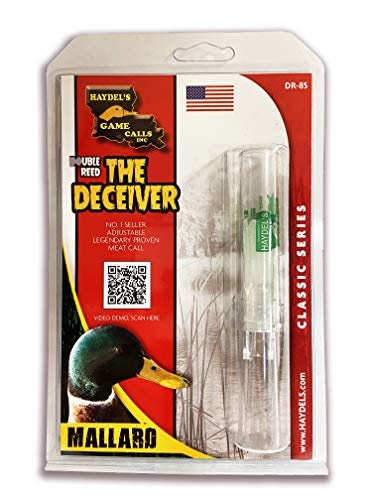


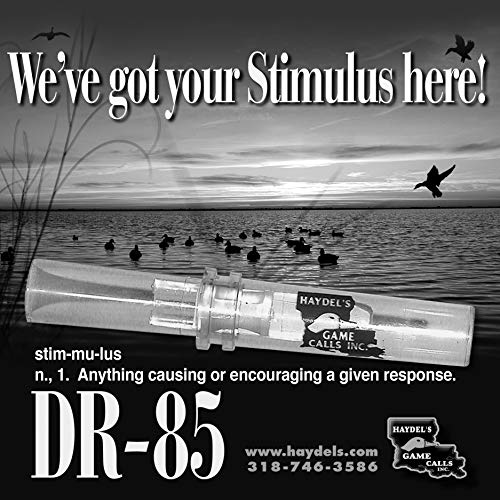
- Nicknamed the “Deceiver and our #1 seller. This is our easiest Duck Call to use and sounds Amazing.
- Duck calls that work for beginners as well as avid duck hunters. Used by many guides.
- An important part of your waterfowl hunting gear, This duck hunting call blows even when its wet.
- Features a fully adjustable floating wedge to allow personal tuning.
- 100% GUARANTEED! Either you’re thrilled, and Love this Duck Call, or You Get Your Money Ba
Prices pulled from the Amazon Product Advertising API on:
Product prices and availability are accurate as of the date/time indicated and are subject to change. Any price and availability information displayed on [relevant Amazon Site(s), as applicable] at the time of purchase will apply to the purchase of this product.
Pros:
- 100% money-back guarantee if you are not satisfied
- Great for kids
- Fully tunable floating wedge
Cons:
- Small in the hand for most adults
Primos Pro Mallard Call


The Primos Pro Mallard Call is great for bringing in ducks from far away thanks to its loud single reed design. This is one of the cheapest calls on the list but is somehow extremely good quality. Despite being very affordable this call is recommended for experienced hunters who know how to deal with a single reed.

- Crafted from the highest quality material ensuring quality and durability
- Pro Mallard
- Made in the U.S.A.
- Single-reed call
- Blows when wet!
- Sounds great in timber or over open water
- Made with .010-Inch Mylar reed for raspy quacks to clear high calls
- Special tuning hole in the bell to sound like more than one duck
Prices pulled from the Amazon Product Advertising API on:
Product prices and availability are accurate as of the date/time indicated and are subject to change. Any price and availability information displayed on [relevant Amazon Site(s), as applicable] at the time of purchase will apply to the purchase of this product.
Pros:
- Extremely affordable
- Made in the U.S.A.
- Very versatile for an experienced caller
- Works when wet
Cons:
- Some reviews say it sounds bad but these reviews are greatly outnumbered by the opposite response
Higdon Outdoors Power Calls: Mallard Duck Call


We conclude our list with a higher-end model for the serious duck hunter who knows their stuff. The Mallard Higdon Outdoors Power Calls sports a sleek look with the performance to match. This is a great all-around single reed call for pulling in high ducks while also boasting an impressive low end to finish them off in close encounters.

- Do It All Single Reed Call
- Hand Tuned By World Class Callers
- Structure: Molded Polycarbonate/Acrylic Blend
- Core Guts: Polycarbonate Jolt J-Frame Tone Bo
Prices pulled from the Amazon Product Advertising API on:
Product prices and availability are accurate as of the date/time indicated and are subject to change. Any price and availability information displayed on [relevant Amazon Site(s), as applicable] at the time of purchase will apply to the purchase of this product.
Pros:
- Hand-tuned before its shipped
- A do it all single-reed call for the avid hunter
Cons:
- Not recommended for newbies due to the difficulty of single-reed calls
- On the more expensive side
How To Chose A Duck Call
Every hunter will have different needs in a call. Just because a call is great for one hunter doesn’t mean it is good for another. Someone who hunts in thick timber with low visibility will have different needs from someone who hunts over open water with high winds.
Single Reed VS Double Reed
A reed is a small component within the duck call that vibrates rapidly when the call is blown. The vibration creates the raspy sound of a duck we all know. Some calls have two reeds. So the question arises. Which type is best for you?
Single Reed– A single reed tends to be very loud and higher in pitch than a double reed. Because of such volume, single reeds are best for long-range calling over open water and windy days. As a downside, they are less forgiving if you make a mistake. Thus they are not recommended for beginners.
Double Reed– A double reed call has two reeds on top of one another. This creates a deep, resonating, raspy sound. Best when used in wooded, low visibility, close encounter scenarios. Because of its forgiving qualities, a double reed is best for beginners.
Choosing The Right Materiel
The three main materials duck calls are made of are plastic, wood, and acrylic—all with their own strengths and weaknesses.
Wood- Wood calls have a smooth, rich, and soft tone making them best for close encounter situations. The softness of the sound largely depends on the type of wood used. A call made of a soft wood like rosewood will have a much more mellow sound than one made of a hardwood such as maple or walnut.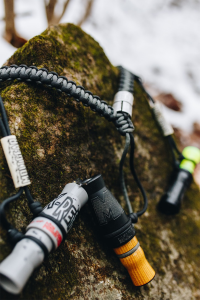
Wood calls are usually less expensive than their acrylic counterparts but are affected by moisture and temperature. With proper care, wood calls will serve you well for many seasons to come.
Acrylic- Acrylic calls are the choice of die-hard hunters who want only the best. The dense material allows for a crisp, loud, clean sound and precise control.
Cost is definitely the downside to acrylic. With some calls running as high as $200, this is a choice for die-hard hunters and calling pros.
Plastic/Polycarbonate- Polycarbonate calls have many of the benefits of acrylic calls but at a much cheaper price point. This lower price comes at the cost of the sharp, clean sound of acrylic. This material will hold up to years of abuse with minimal care.
With a wide range of quality and price, polycarbonate calls are recommended for beginners and pros alike.