


When your green as grass to the world of duck calling, it can be pretty intimidating to take a whack at coaxing in some greenheads with a group of seasoned veterans. But don’t worry; we’ve all been there. Duck calling is not a skill you will learn overnight and can take years to master. But once you learn a few of the basic calling sounds taught below, you will be able to call in greenheads with the best of them. Before you know it, you will be addicted to perfecting your calls any chance you get, in your truck, at the dinner table, or in the oval office. Just be sure to be thoughtful to the missus. 😉
Duck Call History: So when did duck calls come about?
Glad you asked!
Non-patented duck calls were invented as early as the 1850s when a Currier & Ives illustration featured a hunter holding a supposedly early model. In 1863, Fred Allen, from Monmouth, IL, invented the first patented duck call. Before then, hunters would use their own vocals to mimic ducks. Some even chopped the heads off dead ducks to use as a call by blowing through the neck to vibrate its vocal cords. Thankfully we don’t have to do that anymore!
Thanks to modern technology and innovations from duck call pioneers such as Phil Robertson of Duck Commander, calls have become more advanced and realistic than ever.
How To Chose A Duck Call
Every hunter will have different needs in a call. Just because a call is great for one hunter doesn’t mean it is good for another. Someone who hunts in thick timber with low visibility will have different needs from someone who hunts over open water with high winds.
Single Reed VS Double Reed
A reed is a small component within the duck call that vibrates rapidly when the call is blown. The vibration creates the raspy sound of a duck we all know. Some calls have two reeds. So the question arises. Which type is best for you?
Single Reed– A single reed tends to be very loud and higher in pitch than a double reed. Because of such volume, single reeds are best for long-range calling over open water and windy days. As a downside, they are less forgiving if you make a mistake. Thus they are not recommended for beginners.
Double Reed– A double reed call has two reeds on top of one another. This creates a deep, resonating, raspy sound. Best when used in wooded, low visibility, close encounter scenarios. Because of its forgiving qualities, a double reed is best for beginners.
Check out this video from BobbyGuyFilms on the topic of reeds.
Choosing a Style
When looking for a new duck call, there are two main styles to take note of, the “Arkansas Style\J-frame Style Call” and the “Lousianna Style Call.” The Arkansas Style has an insert made up of one piece consisting of a reed and wedge. The Louisiana Style call’s insert is made up of separate pieces. The tone board, wedge, and reed all come apart when the insert is removed. Both come in single or double reed versions. Both styles are good. It is mostly a matter of personal preference when choosing your style.
Choosing The Right Materiel
The three main materials duck calls are made of are plastic, wood, and acrylic—all with their own strengths and weaknesses.
Wood- Wood calls have a smooth, rich, and soft tone making them best for close encounter situations. The softness of the sound largely depends on the type of wood used. A call made of a softwood like rosewood will have a much more mellow sound than one made of hardwood such as maple or walnut.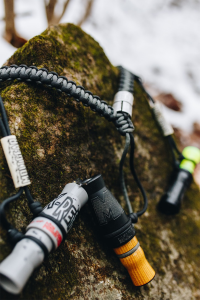
Wood calls are usually less expensive than their acrylic counterparts but are affected by moisture and temperature. With proper care, wood calls will serve you well for many seasons to come.
Acrylic- Acrylic calls are the choice of die-hard hunters who want only the best. The dense material allows for a crisp, loud, clean sound and precise control.
Cost is definitely the downside to acrylic. With some calls running as high as $200, this is a choice for die-hard hunters and calling pros.
Plastic/Polycarbonate- Polycarbonate calls have many of the benefits of acrylic calls but at a much cheaper price point. This lower price comes at the cost of the sharp, clean sound of acrylic. This material will hold up to years of abuse with minimal care.
With a wide range of quality and price, polycarbonate calls are recommended for beginners and pros alike.
The 3 Duck Call Sounds You Must Know

Once you have your shiny new single or double reed call, you’ll want to learn the 3 duck call sounds. If you are hesitant to break out the call with a bunch of experienced hunters, you are not alone. Without a doubt using a duck call is difficult to master, so don’t worry if it takes you a whole year to learn one call sound. We recommend not bringing your call if you are hunting with a group of experienced hunters who can call until you have had a lot of practice at home. An otherwise enjoyable hunt could become unsuccessful and frustrating for everyone when a newbie is practicing his call in the field. So do yourself a favor, find some good YouTube videos and practice, practice, practice till you can mimic the sound exactly. When you feel you have it down, call in those birds without hesitation the next time you hunt with your buddies.
Below are the 3 most important sounds every waterfowl hunter needs in their arsenal of knowledge. We will cover in-depth how to execute each call sound in the next segment below.
The 3 Duck Call Sounds
- #1 The “Quack Call”- The Most Basic Call. Beginners are recommended to perfect this call before trying any other sounds. The quack call is 90% of the sounds ducks make. Every other sound is a variation of the quack.
- #2 The “Feed Call”- The Second call you should learn. This one is tough and can take a few years to master.
- #3 The “Hail Call”- Also known as the “Comeback Call,” This call is meant to be loud to get the attention of far away ducks. Not to be used close range.

How to Execute the 3 Duck Call Sounds
Before you try using your call, you need to know proper hand placement. Place the call between your thumb and index finger. Close your index finger around the call keeping your hand relaxed. You should be able to open and close your hand over the exhaust port to throw your sound for added variation. Bring the call to your mouth and place it on your lips like you would a bottle of water or coke.
#1 The “Quack Call”
Start by humming, not blowing, from the chest into the mouthpiece. Hum in small 1-second intervals repeatedly. It will almost sound like you are saying, “quit, quit, quit.” You should be able to hear your deep humming. If the ducks get further away, start blowing air to increase the pitch. Humming allows you to control the call pitch, unlike blowing into the call, which should only be done to get the attention of long-range ducks. Just remember, give the call a little hum in 1-second intervals repeatedly. It will feel like you are saying, “quit, quit, quit.”
Check out this great video from JT Calls to hear the quack in action.
#2 The “Feed Call”
Start with a slight hum, and barely blow air at the same time. Move into saying “duga, duga, duga” into the call. Saying the sound “duga” or “tika” will make your tongue go up and down. The faster your tongue goes up and down, the faster the clucking sound will be. You can get really fast with this call. You can muffle the call by wrapping your hand over the exhaust port. Open and close your hand to create variation in volume for added realism.
Duck Commander has a nice video on this call.
#3 “The Hail Call” (also known as the “Comeback” call)
Start with a slight hum, then go straight into blowing, almost like blowing a trumpet. Repeat the process to create loud quacks. The first three quacks will be long and drawn out, then get shorter and faster from there. Around 6 quacks in total, give or take, to add variation and realism. Just remember, this call is only meant to be used for ducks that are far away.
Get a nice idea of how this call is supposed to sound in this video.
Conclusion
With so many factors in a duck call to consider, it can be overwhelming to pick a call. To weed things down think about where you will be hunting. Are you planning on hunting over a large lake where you need to call ducks from far away with a loud single reed call? Or will you be hunting in thick timber where a double reed will serve you best?
The best thing you can do to truly know what you like is to try a ton of calls! Whether it be your buddy’s place, at a sporting event, hunting convention or even your local retailer such as Bass Pro and Scheels, ask if they will let you try out their calls to give you a sense of what you like.
Once you find the call you love you’ll be looking for every chance you can get to blow that sucker and dial in your quacks. We hope this guide gave you the knowledge you need to take on the art of duck calling and be successful in the field. Thank you for reading and God bless.






1 thought on “How to Chose & Use Your First Duck Call-[2022]”
Thanks for sharing that you need to hum into a duck call sometimes! My husband really likes hunting so I’m thinking about getting him a new duck call. He mentioned that his is old and doesn’t make as good of sounds anymore.