
How to Catch Mahi Mahi-The ULTIMATE Guide to the Coveted Dolphinfish
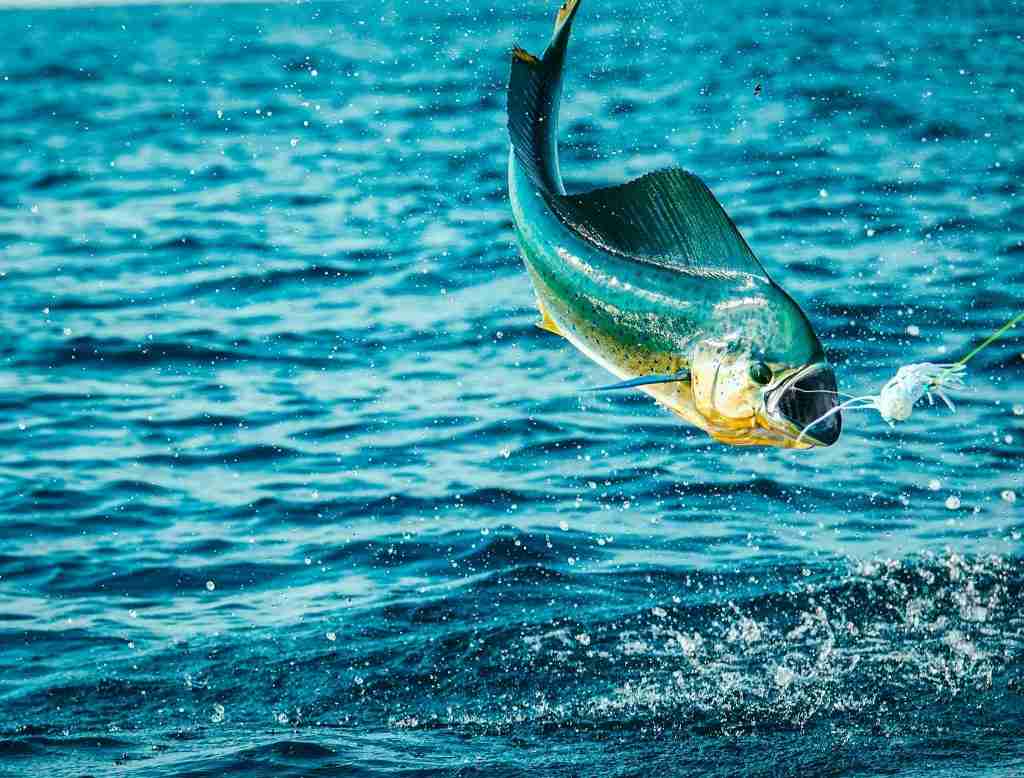
The mahi-mahi, also known as the dolphinfish or in Spanish, the dorado, is a powerful, aggressive, acrobatic, and beautiful fish that every angler dreams of catching at least once in their lives.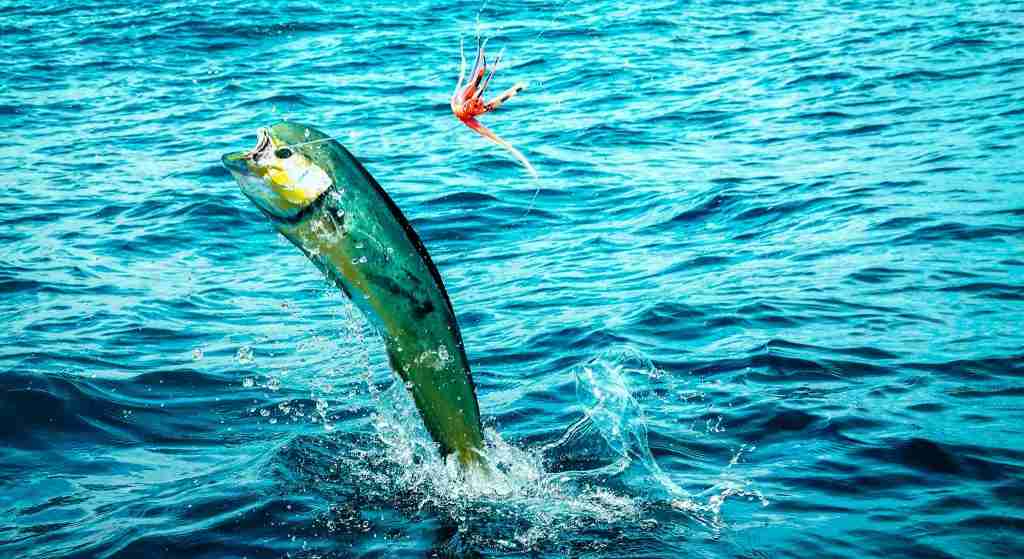
When hooked, they put up a fight like a strong trophy fish but are much more common to catch making them extremely popular for beginners and die-hard anglers looking for a quick thrill. The fact that the name mahi-mahi means “very strong” in Hawaiian, should tell you these fish are a force to be reckoned with. Plus, they are extremely tasty!
Mahi-mahi are one of the fastest-growing fish in the sea, reaching 30 pounds within a year! And females create up to one million eggs 3 times a year. Needless to say, these fish are by no means endangered so there is plenty for everyone!
If you are a beginner looking to get into the mahi-mahi craze, or an experienced angler looking to brush up on your knowledge, you have come to the right place. I put together everything you need to know on one page to give you the ultimate guide to help get you started on the pursuit of this beautiful fish.
Below you will learn-( Feel free to skip ahead to a topic you are most interested in)
- the characteristics and behavior of mahi-mahi
- bring the right bait/ preparation is key
- what climate mahi-mahi live in and how to find them
- the proper equipment
- what to do when you set the hook
- after the catch
- legal guidelines and catch limits
- bonus tip- the importance of keeping up with the moon phases
- recap
#1.the characteristics and behavior of mahi-mahi
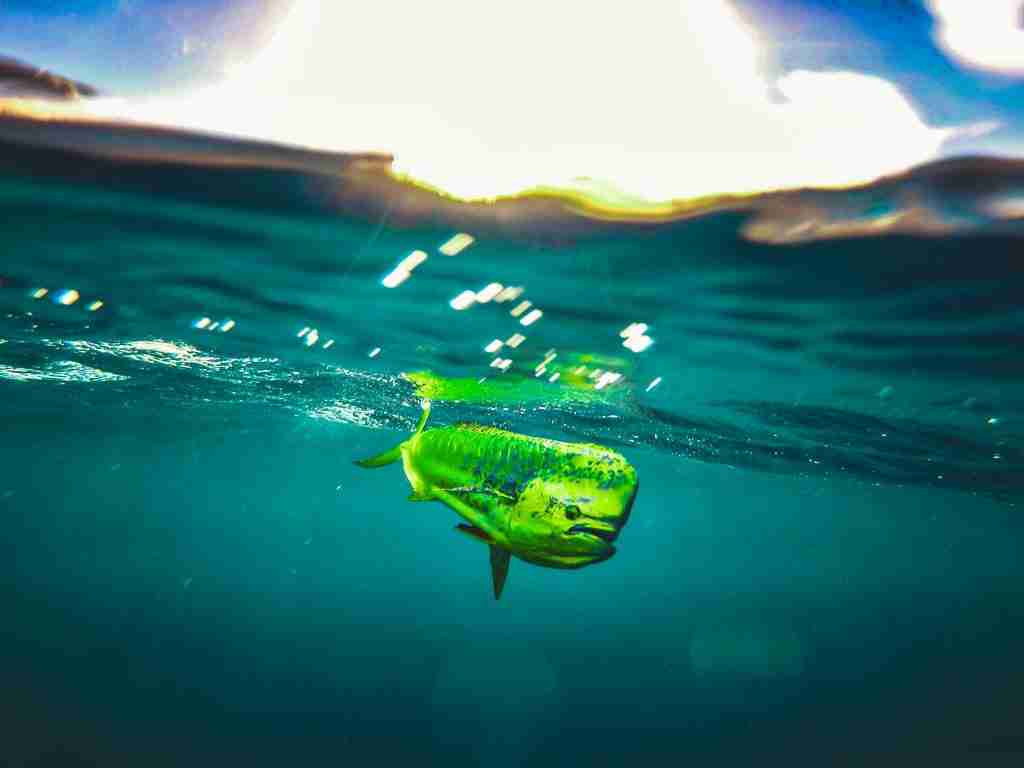
Mahi-Mahi are easy to distinguish from any other fish in the ocean because of pronounced characteristics that give them their striking appearance.
Mahi-Mahi are identifiable by…
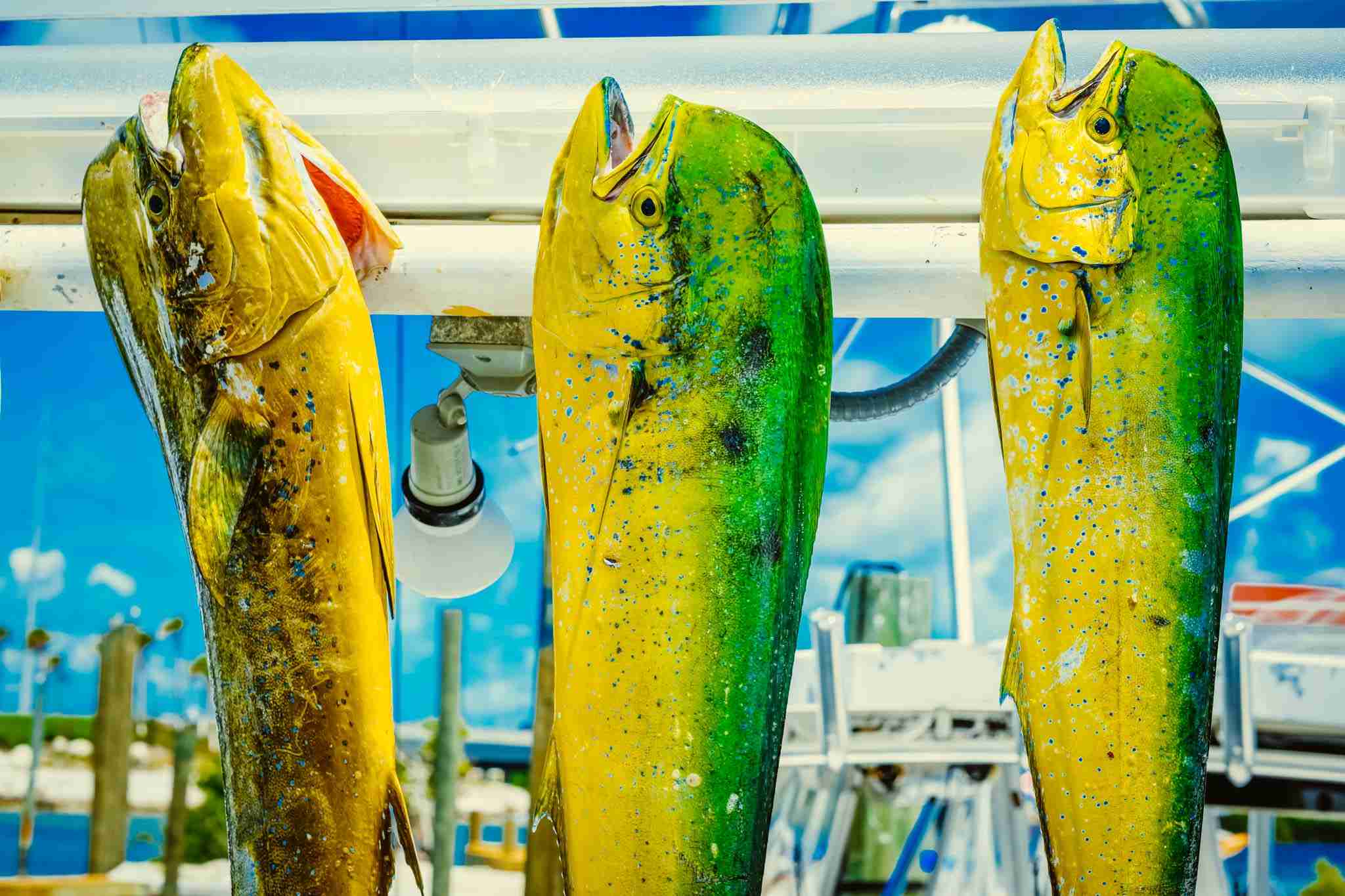
- Bright colorization. A mixture of yellow, gold, and lime green. With blue speckles all over.
- Males have large, box-shaped heads. While females heads are more rounded
- Long dorsal fin from head to tail.
- The pectoral fin is dark blue.
- Can grow up to 50lbs, but rarely exceed 30lbs.
- Sharp, concave tail fin.
About Mahi-Mahi and their behavior…
- Fast and agile.
- Aggressive feeders.
- Surface dwellers.
- Travel in schools.
- Live up to 5 years. Reaching full maturity in just one year.
- Females spawn three times a year producing 60,000 to 1,000,000 eggs each time!
- Can swim as fast as 50 knots, or 57.2mph!
#2. Bring the right Bait/ Preparation is key
One of the biggest pitfalls anglers fall into is not being prepared.
It is very important to have chunks of baitfish or squid on hand as you never know when you might run into a school of mahi-mahi. Having chunks of bait ready to go will allow you to capitalize on a opportunity and keep them around your boat.
Throwing chunks of bait while a school is around will ensure they stay close. This is important because that could be the only school you run into for the whole day.
When you run into a school of mahi-mahi it will be chaos. The last thing you want to do is scramble for your baitfish, and chop it into chunks only to miss what could have been the only opportunity of the day.
The best baitfish to have on hand are…
- Ballyhoo- Ballyhoo is by far the best baitfish for mahi-mahi. It is good to have some whole fish and chunks on hand. The whole fish will be used for bait on your hook. And the chunks of ballyhoo will without a doubt get them excited when thrown in the water.
- Squid- Squid is also a great, cheaper option and gives you more variety if the fish are picky that day.
The best lures to bring are…
Bullethead lures- Bullet head lures are heavy lures used for trolling (the method of pulling bait behind the boat while moving at a steady speed).


Bubblers- Bubblers are also great for trolling and are good at not getting tangled in weeds.

Quick Tip– Blue and pink lures tend to be the most effective on mahi-mahi.
Key Takeaways- Just remember to have your bait and chumming chunks ready because you never know when the chaos will start.
#3.what climate mahi-mahi live in and how to find them
Mahi-mahi are extremely abundant and are found all over the world in tropical and subtropical climates. But some places are definitely better than others and it is important to know where the best locations are for the highest chances of actually having mahi-mahi nearby.
Locations with warmer waters, around 20°C/68°F to 28°C/83 °F are the dolphin’s preferred climate. The most popular locations to fish for dolphin are Hawaii, the Florida Keys, Costa Rica, Panama, Baha California, and the Atlantic Coast of Florida.
How to Find Mahi-Mahi-
If you are in the right climate it is relatively simple to locate a hotspot of mahi-mahi as long as you follow these simple, tried, and true guidelines that will narrow down your search.
When setting out for dolphinfish, the goal is to look for a weedline. This is a defined line made up of brown seaweed called sargassum where the mahi-mahi like to feed. You will only need to go out about 13-16 miles to find some patches of weed.
Once on the weedline, your best bet to find a school of mahi-mahi is to look for signs of life. The easiest way to find a possible hotspot is to watch for birds. The fish tend to always be where the birds are on the weedline. You will want to troll past these locations several times with 2-4 lines in the water. Throwing in some bait chunks here and there will help get the action going. If there are mahi-mahi nearby, and they are hungry, they will come!
Mahi-mahi will be feeding on top of the water and are relatively easy to spot under the water with their bright colors but It always helps to wear a good pair of polarized sunglasses to see clearly under the water.
Shop Costa, Huk, and other popular sunglasses on Amazon HERE
Just remember, look for large patches of weed and signs of life such as birds, and it will almost always lead you to the prize.

Besides weed lines, mahi-mahi like hanging out under any type of floating object, or shaded area. Be it a wooden door, a thick mat of sargasso weed, or even an oil rig. If there are mahi-mahi in the area, you can expect a bite on the first cast. If not, just move to the next possible spot and try again.
It’s not that the floating objects offer protection for the dolphin so they can relax. But the shaded areas provide small eco-systems of small fish for the dolphin to grab as they quickly pass under. Thus it’s important to not get too close to these structures as to not scare away the dolphin and precious snacks the dolphin came for.
On the first sign of dolphin, whether it be one of your lines hooked one or you see a loner streak by under the surface, quickly throw out some bait chunks. If there are more nearby they will frenzy around the boat. You might only catch a few peanuts (term for small dolphin) but they are still great fun to reel in on light tackle. And If you stay long enough, a monster just might come in for a bite. That’s when the real fight starts!
#4.the proper equipment
You can have a great time pulling in smaller dolphins with the average fishing gear but if a big bull bites, you’re in danger of losing your lure or worse, break your rod. Here is the equipment we recommend using to have a successful trip while also giving the fish a fair, fun fight. Well, fun for you that is. You will need 2-4 light tackle spinning setups ready to go to give you the best odds of reeling in a bountiful haul.(Please note we have already gone over what bait and lures to bring in the 2nd section.)
The Proper equipment for Mahi-Mahi…
FISHING ROD- A 7-8ft pole able to withstand 8-17lbs or 10-20lbs.


Shop Rods HERE
FISHING REEL- A spinning reel is the best choice for mahi-mahi.


Shop reels with prices that fit any budget HERE
FISHING LINE- 20-30lbs braided fishing line.


Shop fishing line on Amazon HERE
LEADER LINE- At the end of your line you will want a 30-50lbs test leader line.


Shop leader line on Amazon HERE
FISHING HOOK-5/0 circle hook.


Shop 5/0 circle hooks on Amazon HERE
#5.what to do when you set the hook
Ok, you have run into a school of mahi-mahi and hooked one, but now what?
- Put the boat in neutral before fighting the fish.
- If you have other hands on deck tell them to reel in the other lines. This will help you avoid a huge tangling mess during the fight.
- Have a gaffer on hand or someone holding one ready in case the mahi-mahi is too large to lift into the boat.
#6.after the catch
You’ve reeled in your delicious and beautiful mahi-mahi and taken a picture, now what?
- Measure-The first thing you will want to do is make sure you have the legal length. You are allowed to keep fish 20inchs and up but I personally recommend releasing it if it’s a few inches over 20 because you don’t want to use up your limit with small mahi-mahi. But releasing them back into the ocean is a delicate procedure. When you handle young mahi-mahi, especially with a towel, it will remove its protective slime. This slime is vital to the survival of mahi-mahi. If you handle your fish then chose to release it back into the ocean it will most likely die from infection. Because mahi-mahi grow so fast, it is important not to remove this slime as it will create all sorts of problems for the fish. Our advice, use a de-hooker to avoid handling the fish entirely. Learn how to use one in the video below.


Shop de-hookers on Amazon HERE
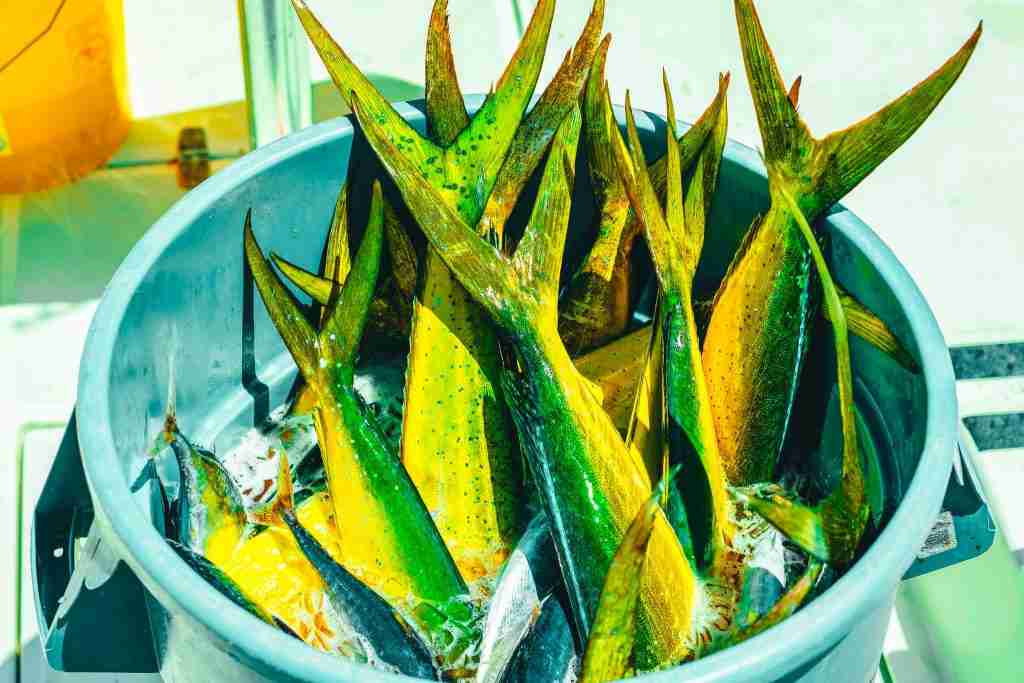
- Get It On Ice- You should always have ice somewhere nearby, whether it be in your fancy YETI or a plastic trash can. Get the fish in the ice as fast as possible to ensure the meat stays safe and fresh.
- Filet Your Catch- When your fishing trip is done it is time to filet and clean your fish so you can turn it into those awesome tacos you’ve been thinking about all day! Learn how in the video below.

#7.legal guidelines and catch limits
Because mahi-mahi are found around the world it would be extremely lengthy to list all the guidelines here. We recommend checking your local guidelines to keep you out of a sticky situation with the law and to keep mahi-mahi in healthy numbers.
#8.How to Catch Mahi-Mahi Bonus Tip- The importance of keeping up with the moon phases
One of the most important things to keep in mind is the lunar calendar. Believe it or not, the moon phases affect the behavior of mahi-mahi. Knowing the lunar phases will help you predict the dolphinfish and keep you one step ahead.
A full moon is the most important phase to keep up with as it has the biggest effect on mahi-mahi.
During a full moon, the dolphin will feed all night and a little into the early morning. This is important to you because around 9 am, the fish will be worn out and their bellies full. Mahi-mahi will become hungry and start feeding again around 3 or 4 pm.
The key takeaway is, if it was a full moon the night prior, there will not be any fish during the middle of the day. It is best to wait for 3-4 pm so you don’t discourage yourself and waste time.
The middle of the day before you head out is a great time to prepare your bait and gear for the mahi-mahi madness.
#9.Recap
Key takeaways-
- Mahi-mahi live all over the world in tropical and sub-tropical locations
- If you want to find mahi-mahi you have to find the mico ecosystems, such as under a weedline, floating objects or around oil rigs.
- Try not to handle mahi-mahi you will release back into the ocean. Use a de-hooker to avoid contact. Shop de-hookers on Amazon HERE
Mahi-mahi are without a doubt one of my favorite fish in the ocean and I am sure I am not alone in saying this. They provide the perfect opportunity for anglers of all experience levels to go out and have a great time. With their exotic colors, impressive acrobatics, extreme abundance, and delicious meat, what’s not to love about these fish. Remember these tips and guidelines above to ensure you have a successful and fun trip catching mahi-mahi whether it be your first time or 100th. Thank you for reading our How to Catch Mahi-Mahi guide.

Want to read more content like this? Check out our How to Catch Hogfish-Ultimate Guide HERE